Production Pipeline Insights
Advanced Matchmove Insights for VFX Professionals
Production Pipeline Insights covers the advanced camera tracking and matchmove workflows that senior artists, matchmove supervisors, and pipeline TDs rely on in high-end VFX, virtual production, and AEC pipelines. Articles here go beyond button-by-button instruction to explain the underlying optical theory, metadata standards, and problem-solving methodology behind PFTrack's tools, including lens distortion and anamorphic squeeze handling, ML-accelerated feature tracking, sensor database deployment across multi-seat studio networks, and single-shot reconstruction for 3D Gaussian Splatting and USD pipelines. Written for practitioners solving real production problems rather than first-time users, this hub is the technical reference point for anyone integrating PFTrack into a broader pipeline.

Production Pipeline Insights
Adam Hawkes
Why Metadata Matters in Modern Matchmoving: A Practical Guide to PFTrack's Metadata Pipeline
A practical guide to PFTrack's unified metadata pipeline and multi-shot scene architecture, why metadata is the foundation of your solve in 2026.
Production Pipeline Insights
Adam Hawkes
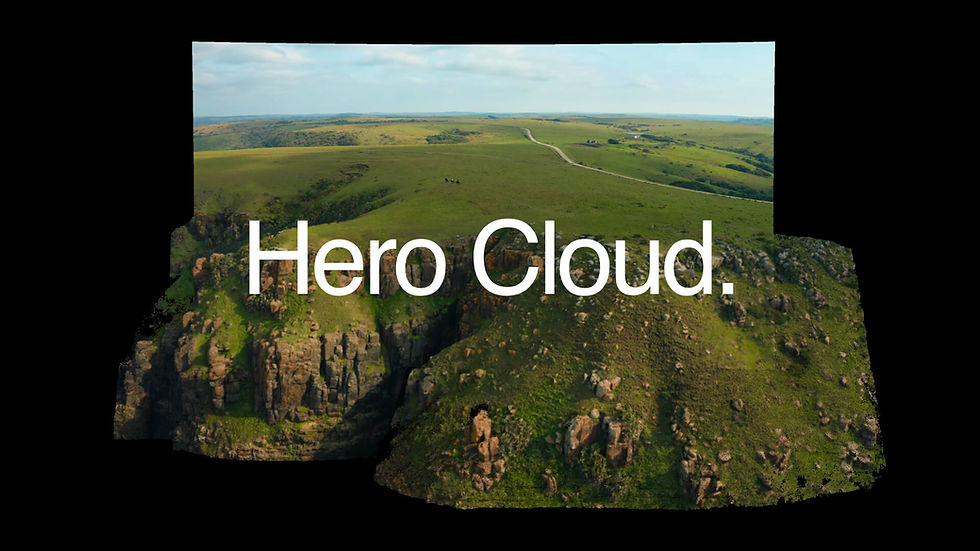
Hero Cloud — Single-Shot Scene Reconstruction in PFTrack
Hero Cloud, a new through-the-lens reconstruction node in PFTrack, generates a measured 3D point cloud from a single tracked shot. Export to Gaussian splat pipelines via Postshot, surface to mesh with Photo Mesh, or use as a measurement scaffold in any DCC.

Production Pipeline Insights
Adam Hawkes
Precision in a Click: PFTrack Camera Sensor Database
In matchmoving, speed and sub-pixel accuracy clash. Manually entering camera data is slow, requiring spec searches, active area checks, and hoping online info is reliable. The Camera Sensor Database fundamentally changes this workflow.

Production Pipeline Insights
Simon Gibson
Maya 2026 export scripts
This export script automatically parents imagePlanes to the camera in recent versions of Maya for smoother workflows.

Production Pipeline Insights
Simon Gibson
PySide2 Example Script
This example PySide2 script lets you quickly jump to and activate any node via a popup window in PFTrack. It’s a solid starting point you can build on to streamline and customise your workflow.

Production Pipeline Insights
Simon Gibson
Export Discreet Ascii Trackers
This script exports each tracker in your project as a separate ASCII file, providing precise frame-by-frame coordinates.

Production Pipeline Insights
Adam Hawkes
Tracking Trees: Solver Presets
A selection of tracking tree presets showing how to solve your camera using a mix of different nodes, ranging from simple to more complex configurations.

Production Pipeline Insights
Adam Hawkes
Tracking Trees: Basic Presets
A couple of basic tracking trees designed for simple camera tracking and object-solving tasks. These trees offer an efficient starting point for common tasks, allowing you to work quickly and effectively.

Production Pipeline Insights
Simon Gibson
Lock Object Motion script
This script can be used to transfer the motion from a moving object geometry track to a camera, keeping the object locked in position in the first frame.

Production Pipeline Insights
Simon Gibson
Postshot export script
This is an experimental export script for exporting cameras and points from PFTrack 24.12.19 and later to Jawset Postshot for Gaussian Splat training.
Production Pipeline Insights
Adam Hawkes
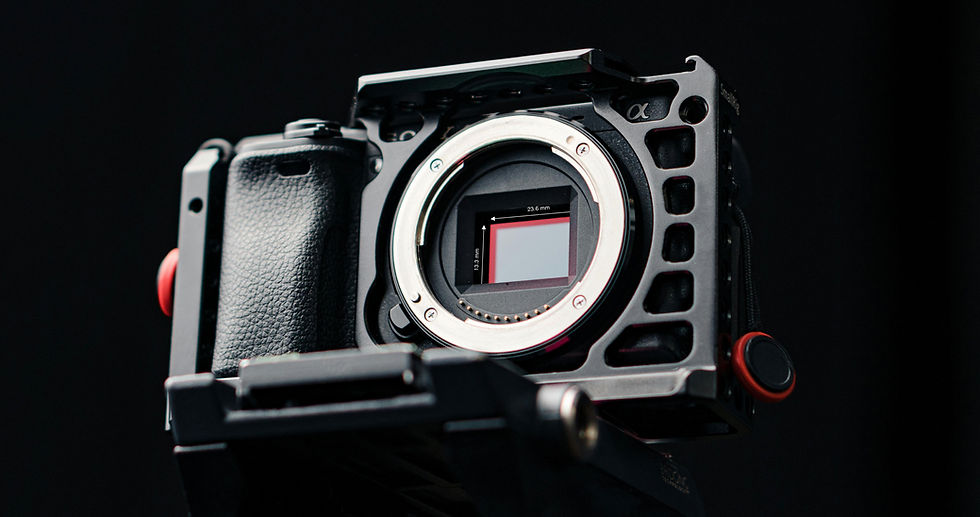
Sensor Size: A Practical Guide for Camera Tracking
Explores the intricacies of sensor size and demystifies key terminology to help you with your camera tracking projects.

Production Pipeline Insights
Adam Hawkes
Why you need to know about distortion calibration
What is lens distortion, and what is distortion calibration? Why is it crucial for your camera tracking and visual effects workflow?

Production Pipeline Insights
Simon Gibson
The How and Why of Feature Tracking in PFTrack
What’s the difference between automatic and manual tracking? Which is better? When should I use one instead of the other?

Production Pipeline Insights
Adam Hawkes
Types of camera movement explained
Knowledge of camera movement, shot size, and angle is essential for all skilled matchmove artists. When directors, editors, and cameramen refer to particular types of camera shots, the terminology can sound like a foreign language if you’re unfamiliar.

Production Pipeline Insights
Adam Hawkes
Camera angles and shot sizes explained
Understanding the language used for shot size/camera angles and combining them with the terms used for camera motion can help you identify and communicate the type of shot you have been assigned.

Production Pipeline Insights
Adam Hawkes
Understanding lenses & camera tracking
In this article, we focus purely on the lens, a component many consider to be the most influential factor in a film's look. But how does it influence the way we matchmove?

Production Pipeline Insights
Adam Hawkes
5 Issues that Could Derail Your Camera Tracking
Matchmoving is becoming more and more of an automated process of tracking and solving. But there are still cases where the keen eye of the matchmove artist can save time by spotting potential issues that could derail your tracks and solve them.

Production Pipeline Insights
Adam Hawkes
Camera sensors and their effect on matchmoving
In this article, we examine some of the camera acquisition types commonly used for film, television, and VR and outline some key factors and limitations that can make a seemingly straightforward matchmove take much longer than expected.
01
We’ll test it:
Our team will check that everything works as expected in PFTrack.
02
We’ll get in touch:
If we have any questions or ideas, we’ll get in touch to chat about it.
03
We’ll publish it:
When it’s ready, we’ll add it here, proudly crediting you for your contribution!
FAQ
Senior artists, matchmove supervisors, and pipeline TDs working in VFX, virtual production, and AEC — practitioners solving real production problems rather than first-time users.
Lens distortion and anamorphic squeeze handling, ML-accelerated feature tracking, sensor database deployment across multi-seat studio networks, and single-shot reconstruction for 3D Gaussian Splatting and USD pipelines, alongside metadata standards and camera/lens theory.
Hero Cloud is a through-the-lens reconstruction node in PFTrack that generates a measured 3D point cloud from a single tracked shot, exportable to Gaussian splat pipelines via Postshot, converted to mesh with Photo Mesh, or used as a measurement scaffold in any DCC.
It replaces manual entry of camera sensor data — normally a slow process involving spec searches and active-area checks — with a built-in, reliable lookup, improving both speed and sub-pixel tracking accuracy.
Yes — there's a practical guide to PFTrack's unified metadata pipeline and multi-shot scene architecture, covering why metadata is foundational to a solid solve.
Yes — Pipeline Insights explains the underlying theory and methodology behind a technique, while Tutorials cover the step-by-step UI workflow for carrying it out.
Yes — submissions such as scripts, macros, or presets can be sent in; the team tests them in PFTrack, follows up with any questions, and publishes accepted submissions with credit to the contributor.